Aude.ai
2025
AI Coaching experience for Engineers's
A coaching feature that turns AI performance insights into real growth conversations with your manager. Engineer adoption up ~40%.
Overview
Background and Role
Aude.ai is a performance evaluation platform for engineering teams. It connects to the tools engineers already work in GitHub, Slack, meeting tools and turns that everyday activity into AI-generated performance insights across three areas: engineering excellence, strategic thinking, and trust and integrity.
It has two users with very different needs: engineers, who receive the feedback, and managers, who are meant to act on it and help engineer with there growth.
The coaching structure follows the organizational hierarchy, allowing each individual to receive guidance from their designated lead.
My Role and Contribution
I led the coaching feature end-to-end its direction, decisions, and tradeoffs on a team of four designers working alongside the company's CEO and product manager.
Problem
The aude.ai platform diagnosed people. It never gave them direction to grow.
Engineer adoption was dropping. The platform could tell someone exactly where they were falling short in there performance review but with insights there. The insight existed, but nothing connected it to a next action step.
“ It just feels like a black box judging and evaluating me. I have no way to ask what those insights and suggestions meant”

Interview participant
Software Engineer
Job to be done Framework
Engineers - When I receive AI-generated performance feedback during evaluations, I want to clearly understand why the insights appeared and what actions I should take next, so I can improve my performance with confidence and trust the system guiding me.
How these problem affects business ? and Why this matters ?

3 business impact and why it matters
Research
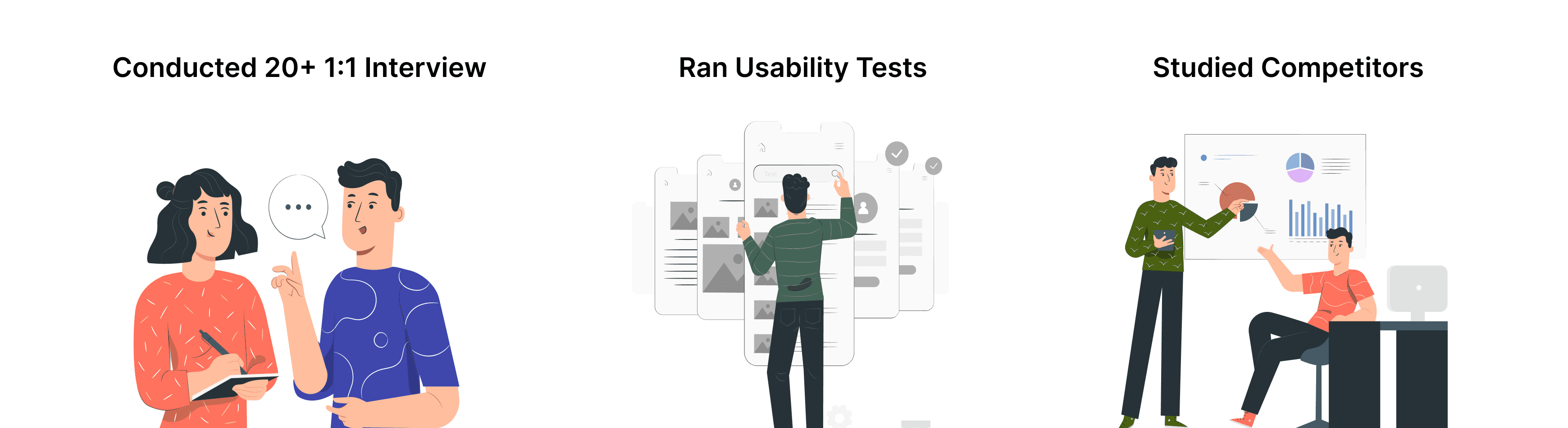
Four findings, from 20+ interviews, a platform audit, and a competitive analysis
To identify friction points across the product, I reviewed the platform’s end-to-end workflow and conducted interviews with users who regularly relied on it for performance evaluation. The research explored how engineers interpreted AI-generated insights, applied them to improve their performance metrics, communicated progress with their managers, and identified opportunities for continued growth.
What I learned
Through interviews, a platform audit, and competitive analysis, I identified recurring patterns in how engineers read their performance insights, interpreted feedback about their work, and decided what to do next. The biggest issue wasn't the accuracy of the AI, it was uncertainty. Engineers skimmed long insight summaries, reopened suggestions to work out where a claim had come from, or scanned several sections before moving on without acting at all. Similar visual weight across every insight made it difficult to tell what actually mattered.
A second pattern showed up around who the feedback came from. Engineers accepted that AI could spot patterns in their work, but they consistently paused before acting on anything that read as a judgment with no person behind it. Feedback delivered without visible reasoning felt like evaluation rather than guidance, and most people set it aside rather than act on something they couldn't trace or talk through with someone.
Across both patterns the same gap appeared. The platform was built to describe performance, not to help anyone change it.
Pivot
My initial AI-driven concept was not implemented after pressure testing with users revealed two key concerns.
My first direction wasn't what shipped. I designed an AI-driven practice sandbox a simulation, close to a digital twin, where an engineer could work on a growth area in a realistic but consequence-free space. On paper it answered the research: personalized, low-pressure, no scheduling.
So I prototyped it and tested it with real engineers early while being wrong was still cheap.

AI Simulation Wireframe using Digital Twin technology

Chatbot for assistance
It failed, for two reasons:
It cost real time. Engineers would have to pull hours out of their actual work to practice in a simulation with no actual result coming out.
They wouldn't trust it. Nobody wanted to hand their entire growth process to AI. They wanted a person in it. Having a lead in the loop felt more right that AI taking the front seat.
Testing interaction resulted
Before moving into the next iteration, I reframed the concept around a human-in-the-loop approach. In this model, AI surfaces relevant insights and recommendations by analyzing data from peers and the platform, while individuals remain responsible for making decisions about their improvement and professional growth.
Designs
Where coaching sits in the product flow
The final redesign focused on placing coaching at the exact point where the old flow dead-ended: the moment an engineer understands an insight. Help is most useful when confusion happens

Feedback as patterns, not walls of text Insights are shown as sized clusters the bigger the pattern, the more feedback behind it. What matters most is visible before you read a word. Each is tagged by performance area, so engineer will know instantly whether it's about there craft, thinking, or communication.
Pattern Recognisation section on the homepage of the dashboard
Requesting coaching, straight from the insight An overlay, not a new page so the engineer stays in their performance context. It carries the pattern as evidence, a chosen recipient, and what they want out of the session. It shows as pending until the manager responds, because silence after a request is where trust breaks.
Requesting coaching session with the manager based on the feedback
A shared session board Both people work from one board and fill it live as they talk. What the engineer originally asked for stays pinned at the top, so the conversation stays anchored to the real need.
AI that answers, rather than volunteers Transcription runs throughout. Afterward, the engineer can ask the transcript questions "what milestones did we agree on?" and get back editable blocks, each traceable to the moment it was said. They curate what's real onto the board themselves.
Upcoming -> Join Meeting -> AI Transcripting -> Shared Board
The Sessions page brings together meeting notes and transcripts, allowing engineers to revisit past conversations and ask follow-up questions. Engineers can also edit a session board, share it with their manager for approval, and align on shared goals. Sessions can then be scheduled based on their individual needs.
Session Page that consolidates all the information about the sessions conducted
During a meeting with their manager, engineers can create a follow-up session within the existing session to maintain a continuous feedback loop until the desired outcome is achieved. Tasks, milestones, and goals can be carried forward to the next meeting for continued discussion and progress tracking.
Create another session during the ongoing meeting
Lessons
What I learned through the whole project
Test the idea you're most confident about first. Confidence is exactly the thing that needs pressure-testing. The sandbox failing early was worth more than it succeeding late.
With AI products, trust isn't a final polish it's a design input. The whole feature stood or fell on whether people believed it was safe to be honest in.
Impact
Version 3 testing gave us impact

"It gives my feedback a clear path to real growth especially with my manager in the loop."
Senior Software engineer
Atlassian
Happy to walk through the full flow, the edge cases, or the research in more depth.
